

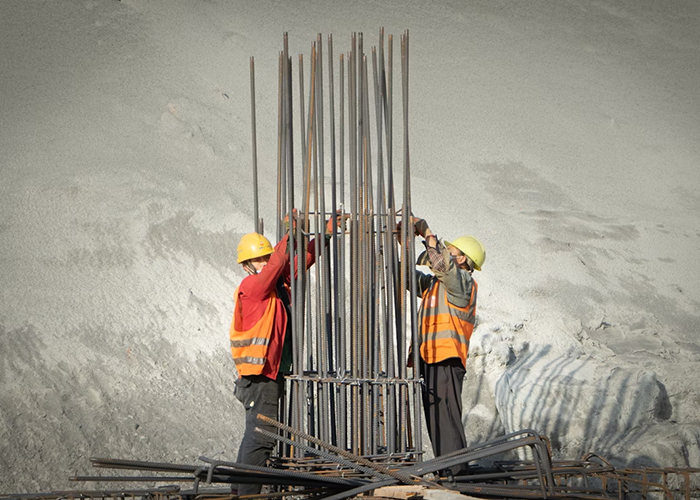
We didn’t start with a blank slate, we started with lived experience. But we didn’t stop there. When we set out to build COSO, we already knew many of the industry’s pain points because we had faced them ourselves. But to truly solve them, we needed to widen our lens. So we talked. We listened. We observed. From metro projects in Delhi to housing in Singapore, transport corridors in Indonesia, and high-density sites in Hong Kong, we spoke with engineers, planners, consultants, site supervisors, and developers. These conversations, across public and private sectors, across budgets and project scales, helped us shape COSO.
Every conversation confirmed what we felt. The problems were everywhere. Delays were considered normal. Visibility was poor. Data existed but was rarely usable. Most tools were not built for construction, they were designed for generic project tracking and force-fitted into engineering workflows. One person said it best. “We’re managing physical work with digital tools that don’t understand what’s physical.” That line stuck with us. It’s why we built COSO not just as a tool, but as an applied solution, shaped by civil engineering logic. Our platform is built with the instincts and decisions of real practitioners in mind.
Our dashboards are designed for site teams, planners, and project heads who are juggling real-world pressure. We introduced modularity because no two projects are the same. We allowed for customization because teams differ. We focused on a clean interface because, again and again, we heard, “I don’t want another system that slows me down.” COSO is the result of what we saw, heard, and lived. And the only way forward is to keep listening, keep learning, and keep improving.